About Me Real Mehedi Free Framer Template Photography

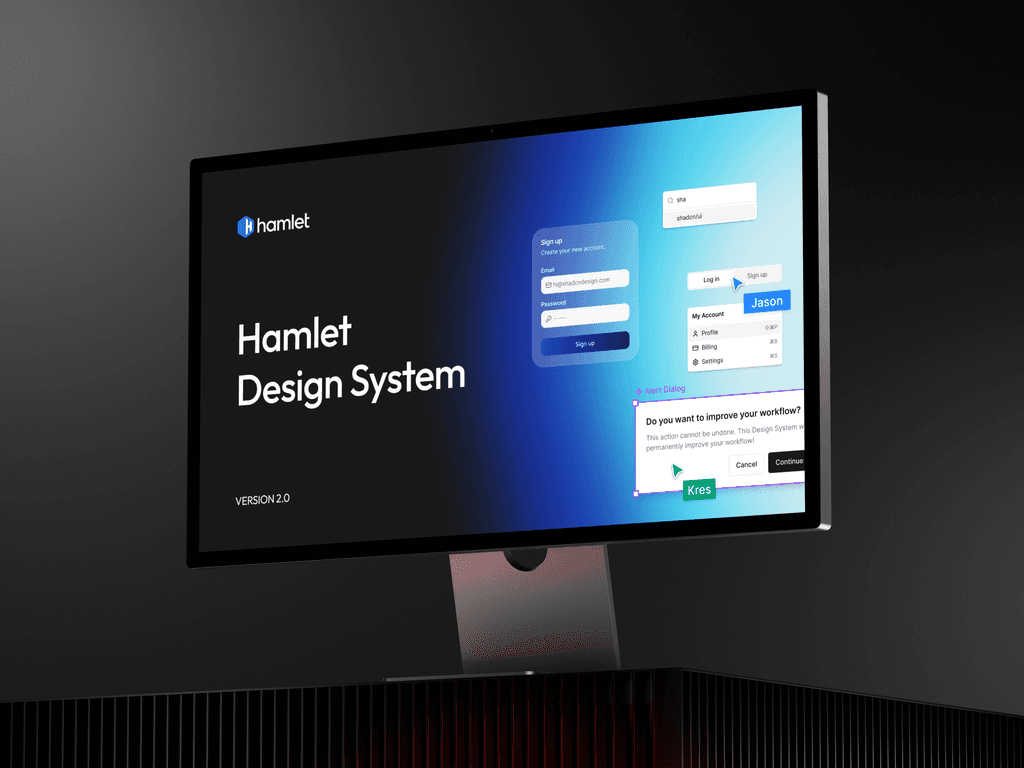
The Hamlet Design System: Scaling Product Maturity and Securing $2.5M in Funding.

The Hamlet Design System: Scaling Product Maturity and Securing $2.5M in Funding.

The Hamlet Design System: Scaling Product Maturity and Securing 1.5M AUD in Funding.

The core challenge was to transition Hamlet from a fragmented collection of products into a unified, scalable ecosystem.

The core challenge was to transition Hamlet from a fragmented collection of products into a unified, scalable ecosystem.

The core challenge was to transition Hamlet from a fragmented collection of products into a unified, scalable ecosystem.

Before the DS, Hamlet's 4 products operated in silos. Each product line had to re-design and re-develop existing components, resulting in resource waste and significant technical debt, threatening the company's ability to scale.

Before the DS, Hamlet's 4 products operated in silos. Each product line had to re-design and re-develop existing components, resulting in resource waste and significant technical debt, threatening the company's ability to scale.

Before the DS, Hamlet's 4 products operated in silos. Each product line had to re-design and re-develop existing components, resulting in resource waste and significant technical debt, threatening the company's ability to scale.

2.5M AUD
Contributed
in funding secured

2.5M AUD
Contributed in funding secured

1.5M AUD contributed in funding secured

Business Impacts

Business Impacts

Business Impact

Business Impacts

Unified 4 Products
(Mobile App, Admin Hub,
Public Shop, Member Portal).

Unified 4 Products
(Mobile App, Admin Hub,
Public Shop, Member Portal).

Scope & Scaling

Scope & Scaling

Scope & Scaling

65%
Reduction in UI bugs related to inconsistency.

Product Stability

Product Stability

40%
Reduction in time spent designing new features.

Design Efficiency

Design Efficiency

65%
Reduction in UI bugs related to inconsistency.

Product Stability

40%
Reduction in time spent designing new features.

Design Efficiency

My roles

My roles

My roles

Design System Manager/Creator

Design System Manager/Creator

Design System Manager/Creator

Responsible for the creation, management, and continuous update of the entire Design System (DS)

Responsible for the creation, management, and continuous update of the entire Design System (DS)

Redesign and implementation of 4 main products (Mobile App, Admin Hub, Public Shop, Member Portal) based on the Hamlet DS

Redesign and implementation of 4 main products (Mobile App, Admin Hub, Public Shop, Member Portal) based on the Hamlet DS

Principles

Principles

After spending time exploring and practicing Atomic Design, this project gave me the chance to truly put those lessons into practice and build a design system with real impact.


Atoms

Atoms

Atoms

Molecules

Molecules

Molecules

Organisms

Organisms

Organisms

Templates

Templates

Templates

Pages

Pages

Pages

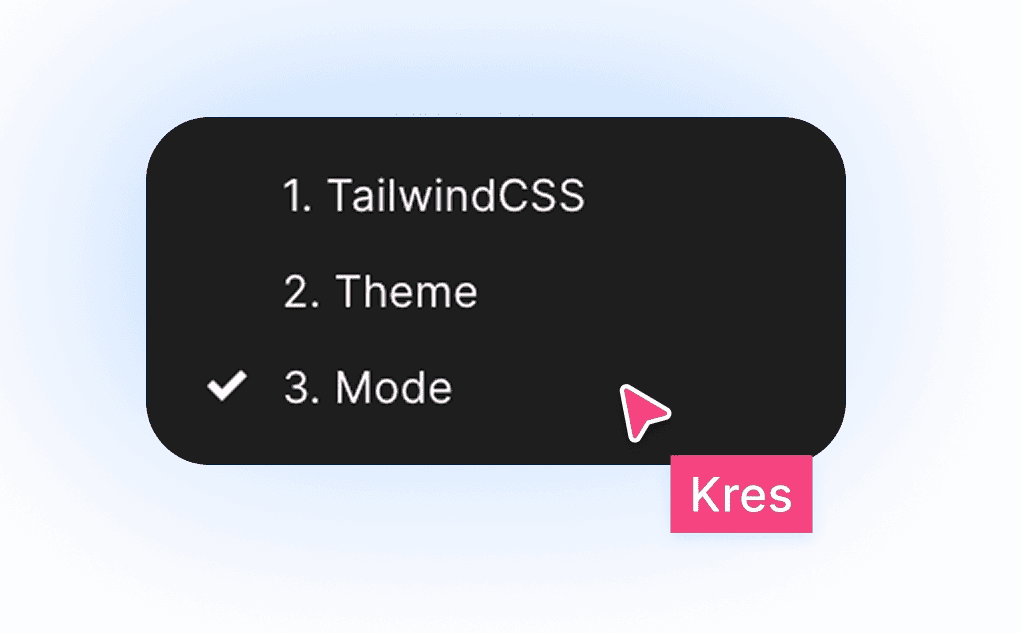
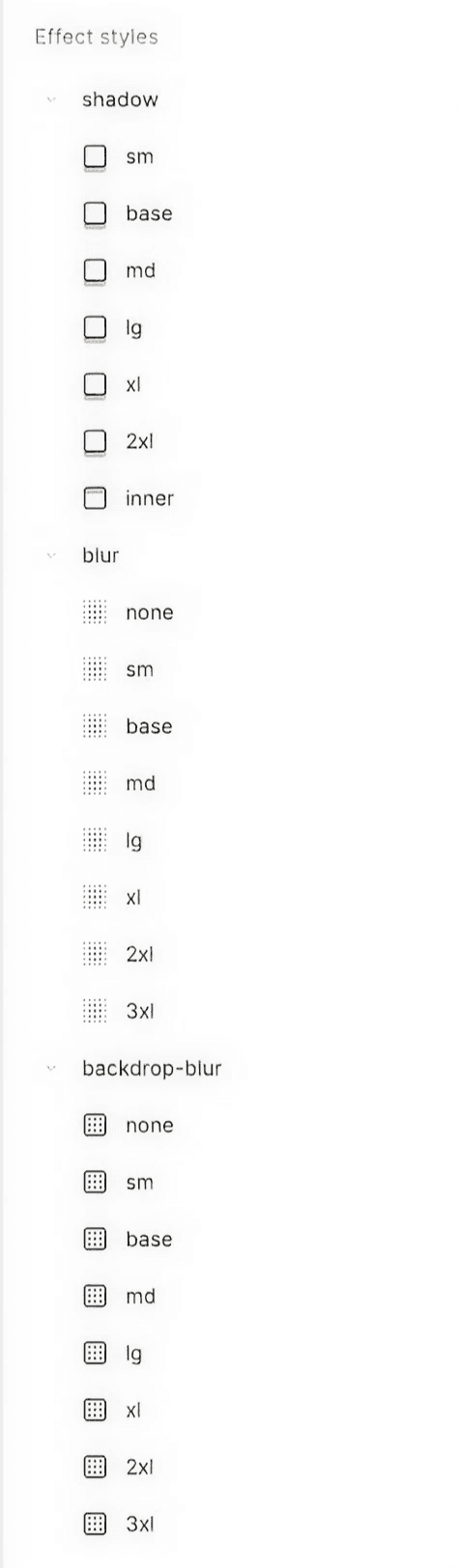
Goal: Ensure core consistency and branding. This layer maps Tailwind values to functional roles (e.g., $color-primary, $border-subtle). This forms the consistent visual identity across all Hamlet products.

Theme

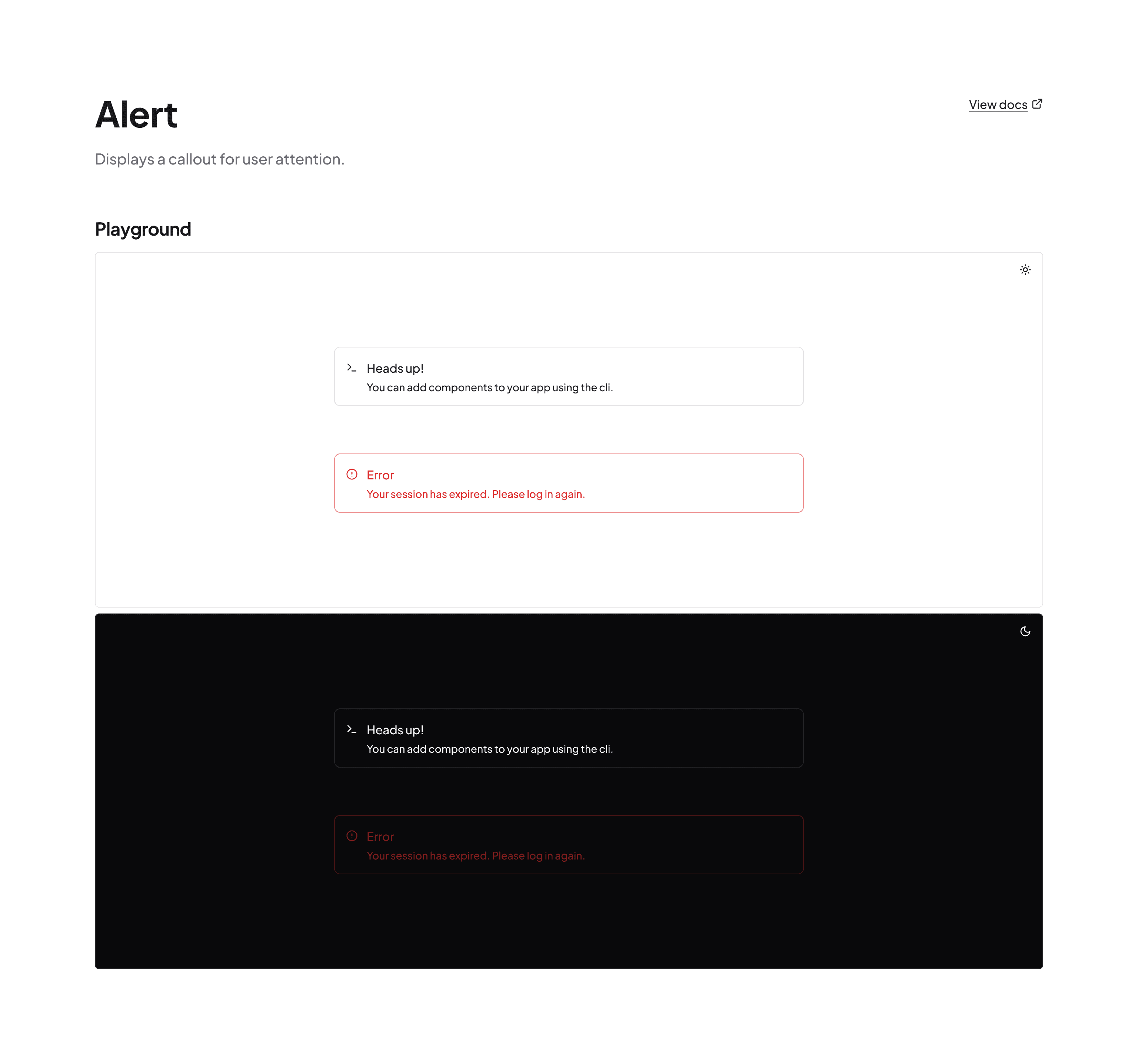
Goal: Handle high-level variants and platform differences. This layer overrides Theme Tokens based on specific context (e.g., handling Light/Dark Mode, or adjusting size/density for the Mobile App environment versus the Admin Hub).

Mode

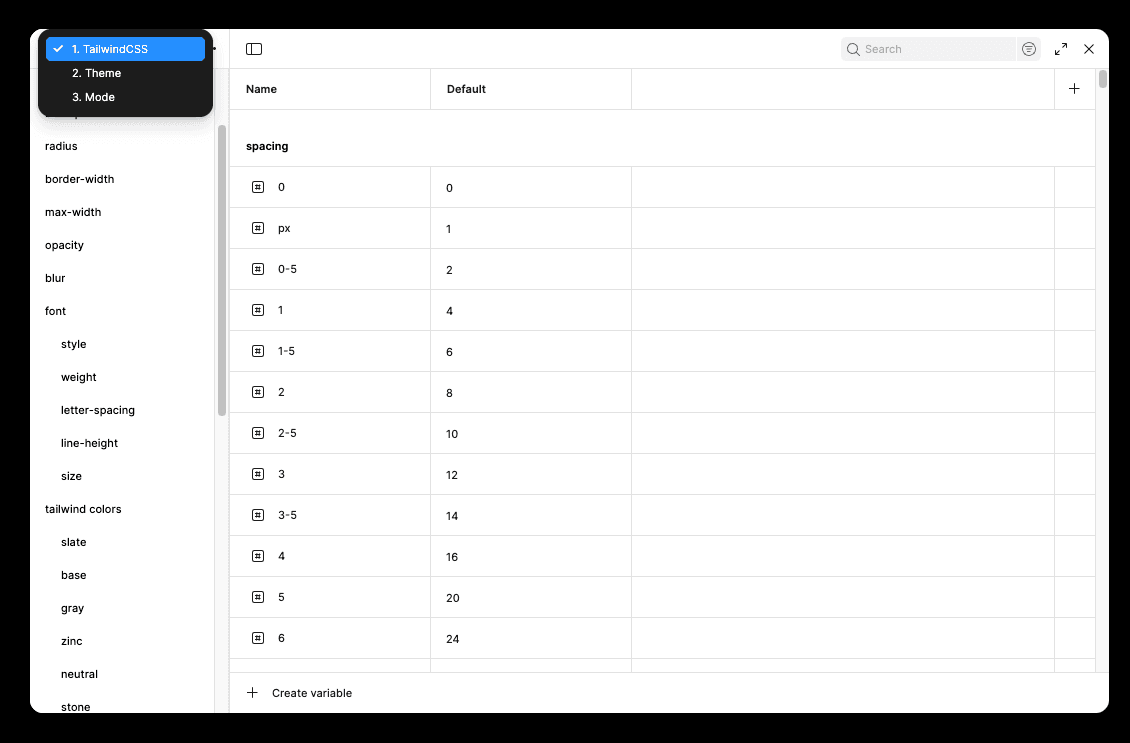
The fixed, foundational layer. We utilize Tailwind's utility classes and CSS variables as raw primitives to maximize development speed and leverage existing standards.

Tailwind CSS/CSS Variables

Step 2: Core Component Development and Strategic Documentation

Goal: Apply the Tokens to build complex Components (like Data Tables, Forms) and create detailed Documentation to ensure the DS is immediately reusable across all 4 products.

Step 2: Core Component Development and Strategic Documentation

Goal: Apply the Tokens to build complex Components (like Data Tables, Forms) and create detailed Documentation to ensure the DS is immediately reusable across all 4 products.

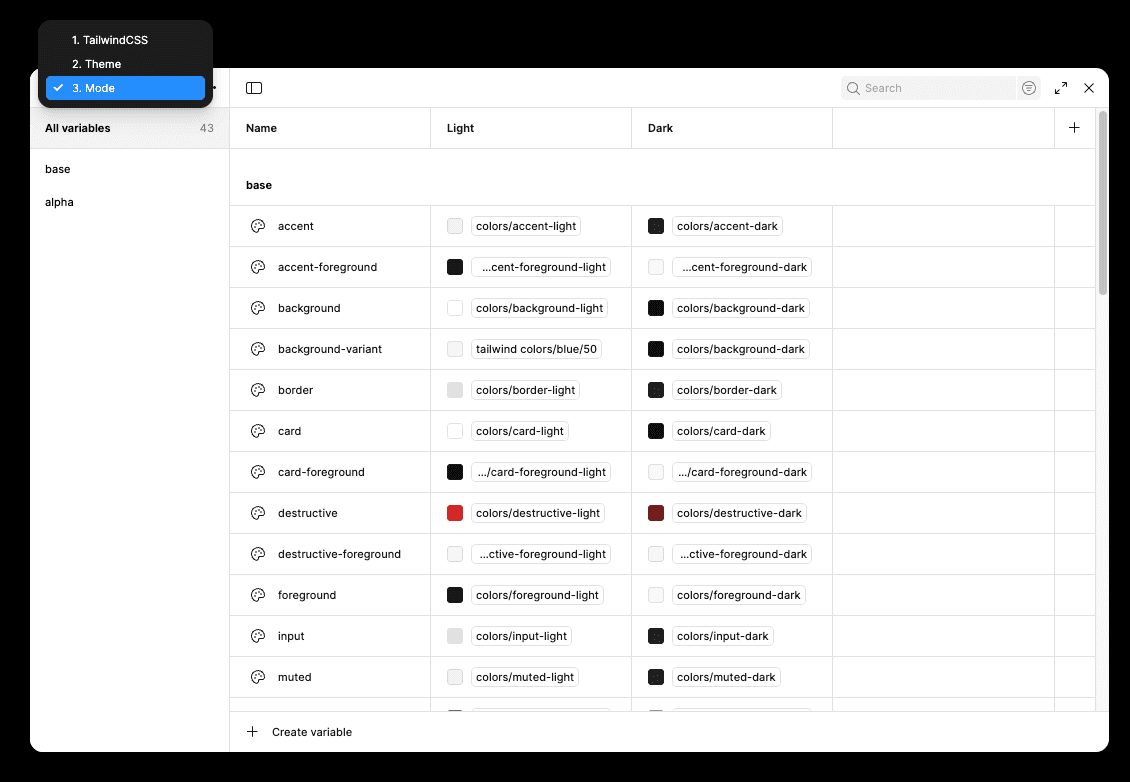
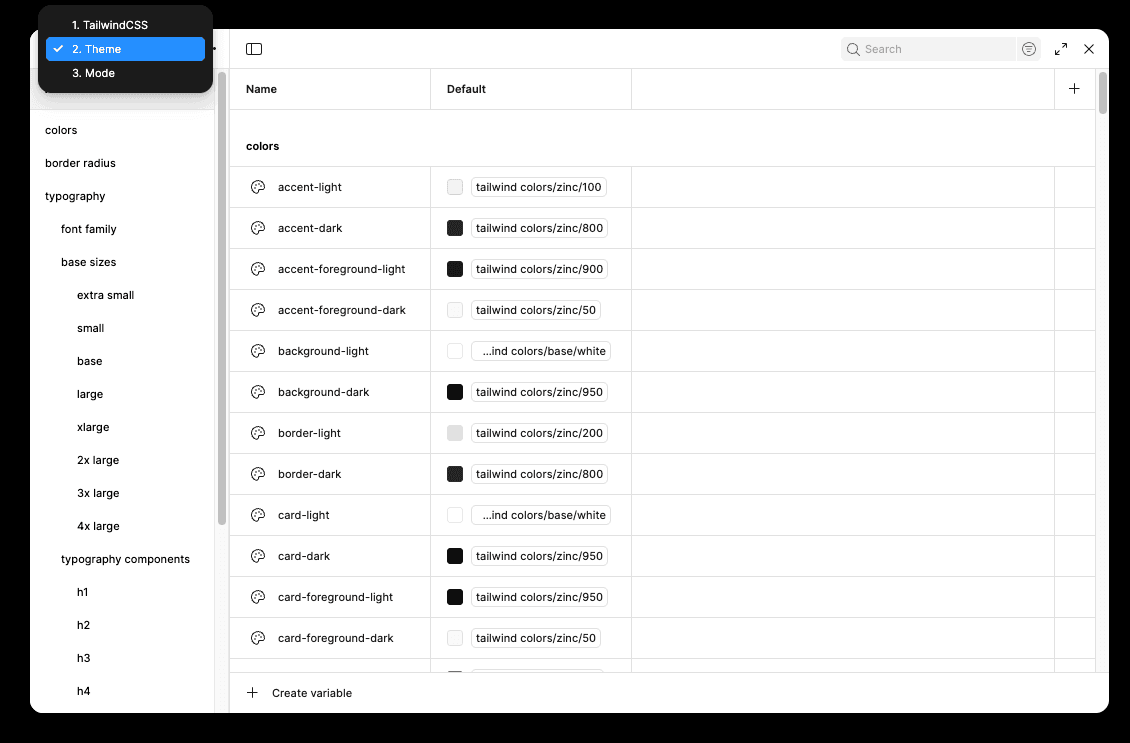
Step 1: Establishing the 3-Tier Token Architecture

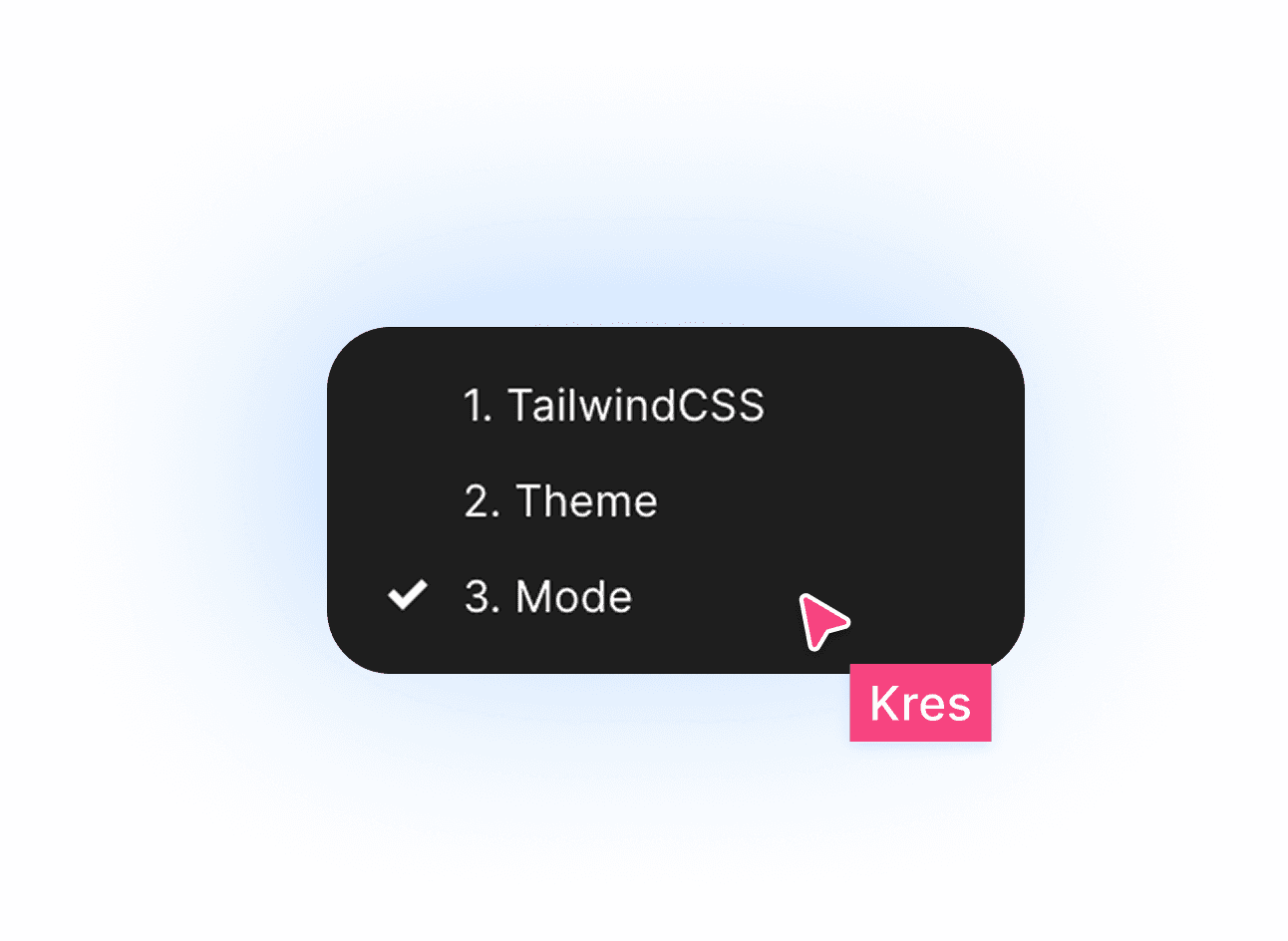
Goal: to support brand differentiation (B2B vs B2C) and maximize scalability across all 4 products, we structured the Design Tokens using the 3-Tier hierarchy (TailwindCSS - Theme - Mode).
Tailwind CSS/CSS Variables

The fixed, foundational layer. We utilize Tailwind's utility classes and CSS variables as raw primitives to maximize development speed and leverage existing standards.

Theme

Goal: Ensure core consistency and branding. This layer maps Tailwind values to functional roles (e.g., $color-primary, $border-subtle). This forms the consistent visual identity across all Hamlet products.

Mode

Goal: Handle high-level variants and platform differences. This layer overrides Theme Tokens based on specific context (e.g., handling Light/Dark Mode, or adjusting size/density for the Mobile App environment versus the Admin Hub).
Step 2: Core Component Development and Strategic Documentation

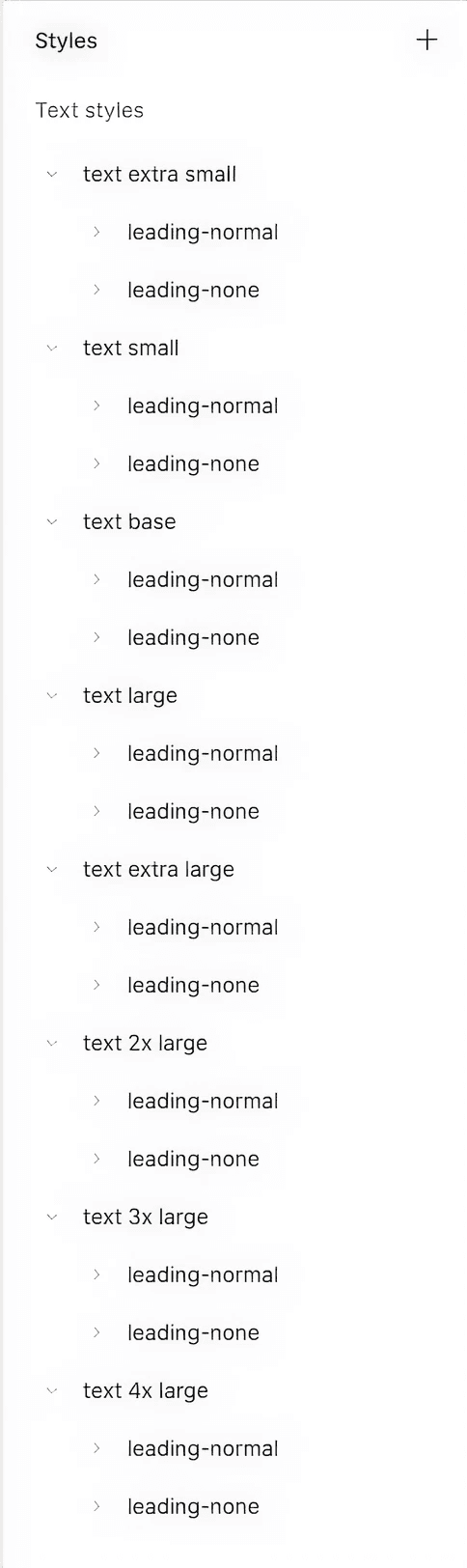
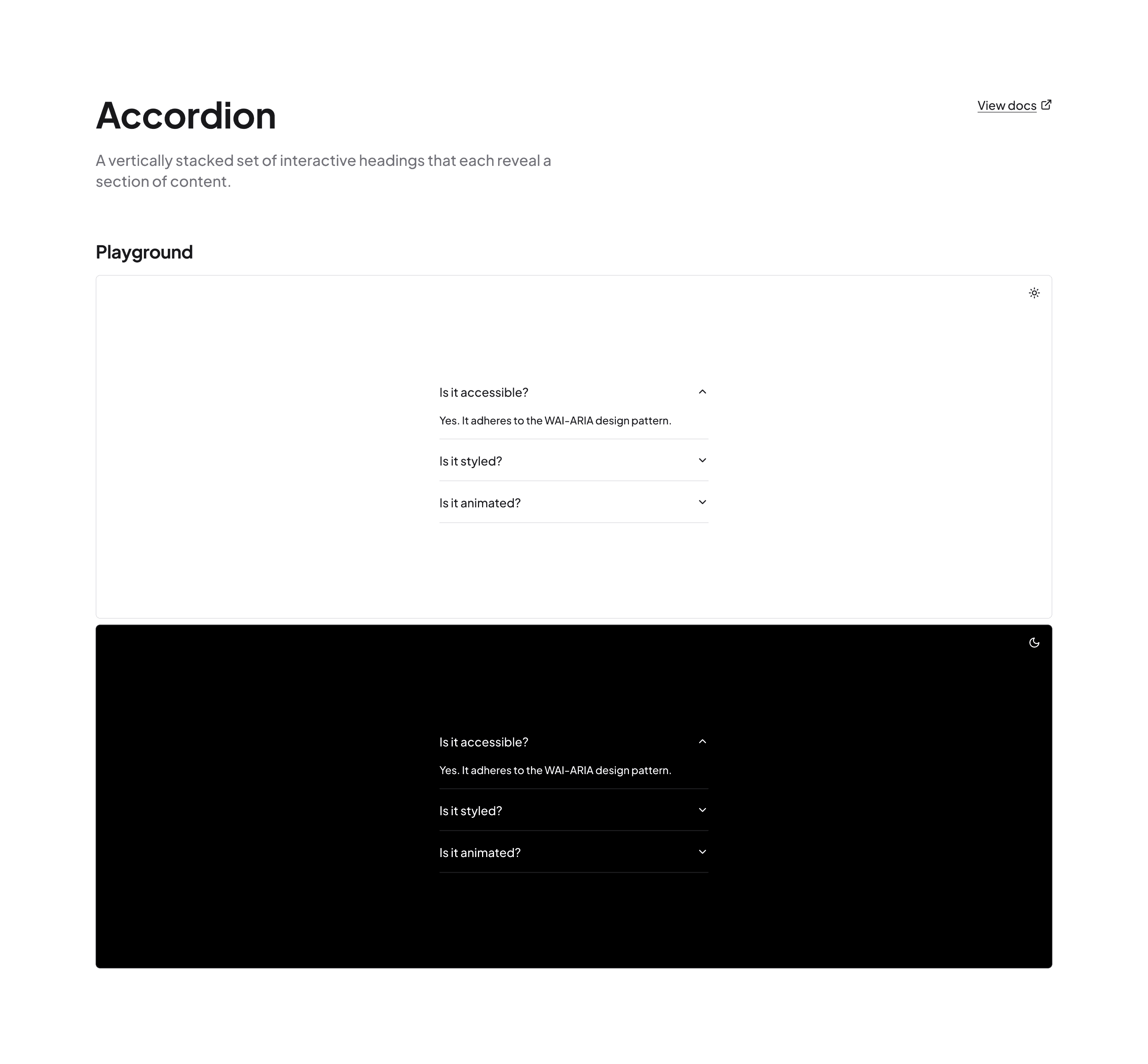
Goal: Apply the Tokens to build complex Components (like Data Tables, Forms) and create detailed Documentation to ensure the DS is immediately reusable across all 4 products.
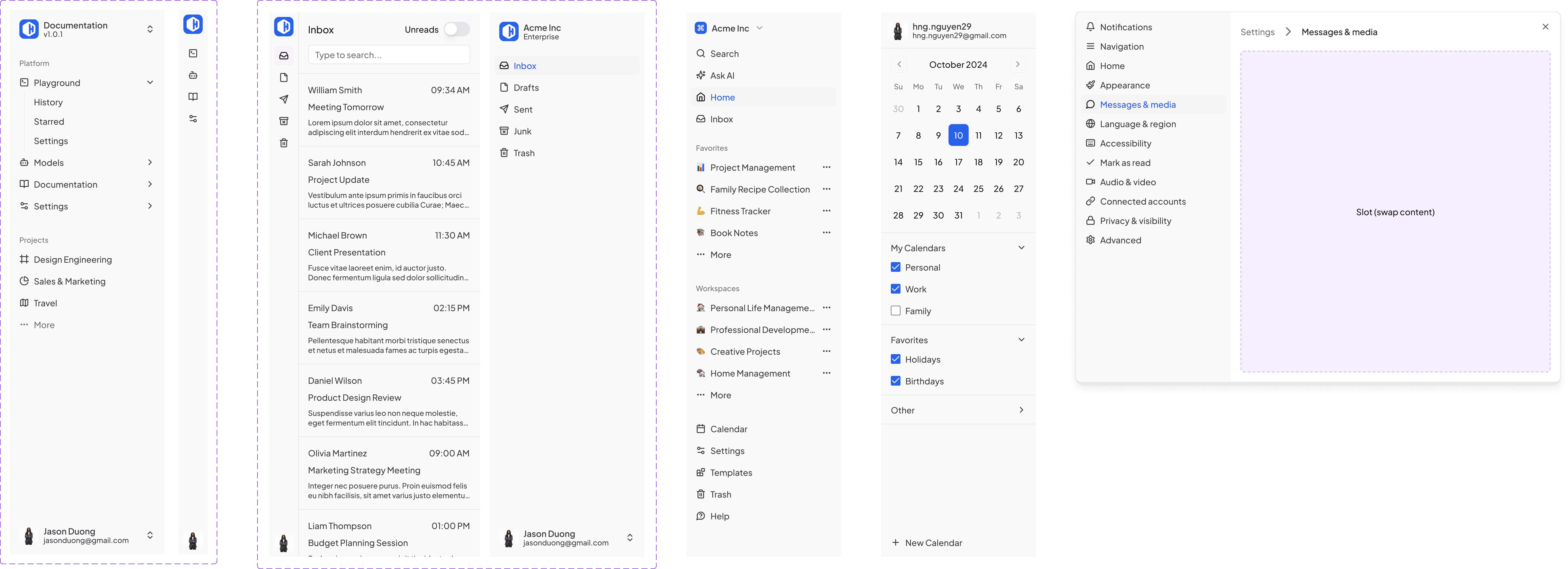
Sidebar Components

Goal: Apply the Tokens to build complex Components (like Data Tables, Forms) and create detailed Documentation to ensure the DS is immediately reusable across all 4 products.
Create a free website with Framer, the website builder loved by startups, designers and agencies.